
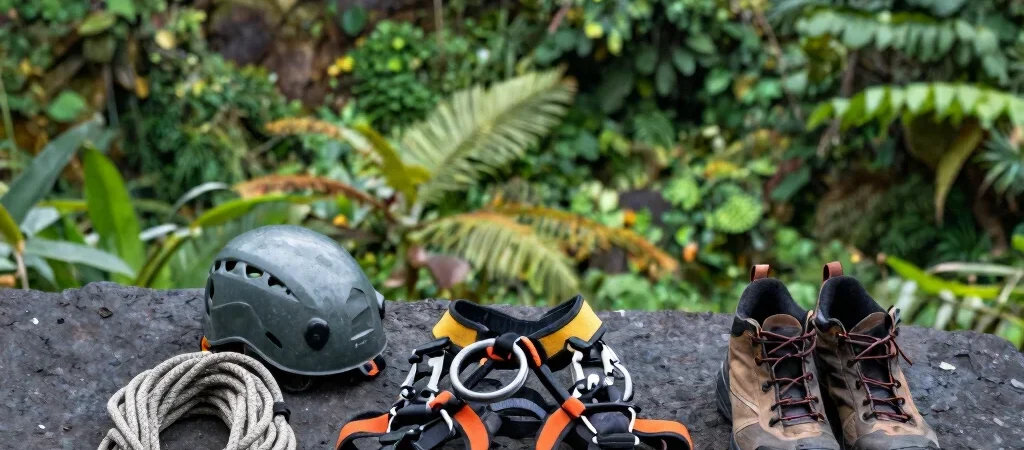
Packing for a canyon in Réunion is not a matter of taking a generic checklist and hoping it fits. Water, wet rock, volcanic terrain, and the route’s specific demands all shape what equipment is appropriate.
Start with a route briefing
Before choosing equipment, establish which route is actually planned and confirm its current requirements. A helmet, harness, wetsuit, rope, and descent device each have a role, but naming them does not make an outing ready or show that a person knows how to use them.
Equipment condition and suitability matter as much as the item itself. Use gear appropriate to the route and the wearer, and follow the instructions of the responsible, legally qualified professional when the activity is guided.
Practice before relying on it
Technical equipment only helps when people understand its use and limits. If a technique, device, or group role is unfamiliar, get instruction before relying on it in a canyon rather than trying to learn under pressure.
Recheck the plan when conditions or group members change. A setup that suited one outing should not automatically be carried over to another site or another day.
Pack for the environment
Keep the natural setting in mind as you prepare: secure loose items, avoid leaving anything behind, and respect access rules. In a narrow ravine, small pieces of litter can be difficult to retrieve and remain part of the environment long after the group has passed.
The best equipment decision is made before departure: match the kit to verified route information, current conditions, and your actual training. If one of those pieces is missing, resolve the gap before entering the canyon.