
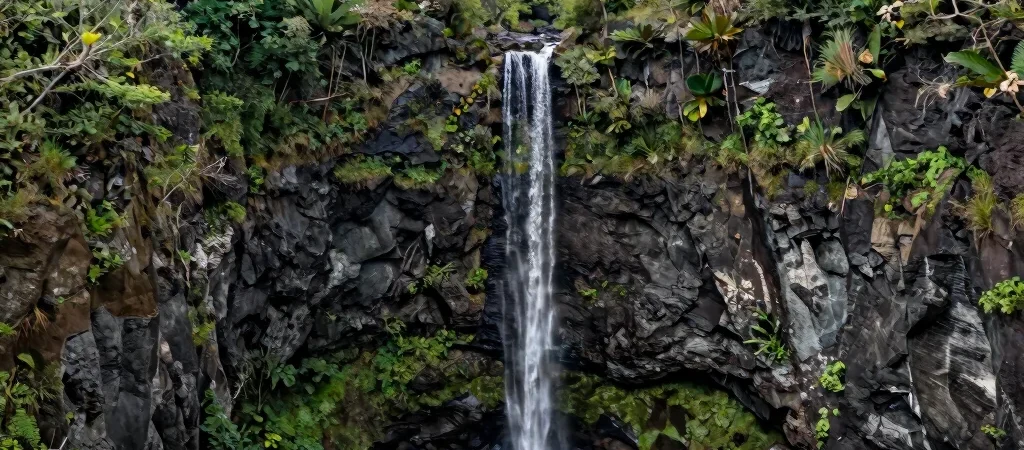
Fleur Jaune is one of the names that draws canyoners toward Cilaos, but a famous site name is not a current route briefing. The island’s volcanic terrain and steep ravines make the setting part of the outing—and a reason to check the details before setting out.
Read the landscape first
Cilaos sits within a dramatic mountain landscape shaped by volcanic activity and erosion. In a canyon, rock, water, and the terrain above the ravine all matter; a waterfall alone cannot tell you what a route involves.
Treat any description of Fleur Jaune as a starting point for research, not proof that access or practice conditions are unchanged. Route information can become outdated, and details such as approach, equipment, and difficulty need confirmation from reliable, current sources.
Check what can change
Before planning a descent, confirm whether access is permitted and whether restrictions or closures apply. Then seek current information on conditions; recent rain and conditions beyond the visible start of a canyon can affect what is safe to attempt.
If you plan to go with a professional, verify that the person is legally qualified to supervise the activity. Do not rely on an old listing to establish that a provider is active, available, or appropriate for your outing.
Leave room to reconsider
A sound plan includes the option to change it. If access, conditions, or the group’s ability are uncertain, postpone the descent or choose a different activity rather than treating a well-known canyon as a guaranteed go.
The useful takeaway for Fleur Jaune is simple: research the place, then verify the day. That is how a striking Cilaos landscape becomes a responsibly planned outing rather than an assumption.